 Loading... Please wait...
Categories
Our Newsletter
- Home
- Monthly Medicine- Thuja
Monthly Medicine- Thuja
Below are the notes I used to teach Monthly Medicine for January 2026. They may not seem organized and are not edited for grammar etc. They are Just class notes for students who may have missed something. We discussed Thuja. We talked about good ( reliable) and bad sources of information on the internet. We garbled the herb, made a tincture and butter.
NOTHING IN THESE PAGES IS DESIGNED TO DIAGNOSE, CURE OR TREAT MEDICAL DISEASE, SEE A DOCTOR IF YOU HAVE QUESTIONS ABOUT MEDICAL DISEASE ( OR-GIVE TO CEASAR WHAT IS CEASAR'S)
DO NOT EVER INJEST THUJA ESSENTIAL OIL IT IS VERY TOXIC. AVOID EATING THE LEAVES FOR THE SAME REASON. IF YOU CHOOSE, ONLY USE INTERNALLY HIGHLY DILUTED FOR SHORT PERIOD
Thuja occidentalis
Is commonly used in homeopathy
The tincture ratio is 1:10 at 60%-70%
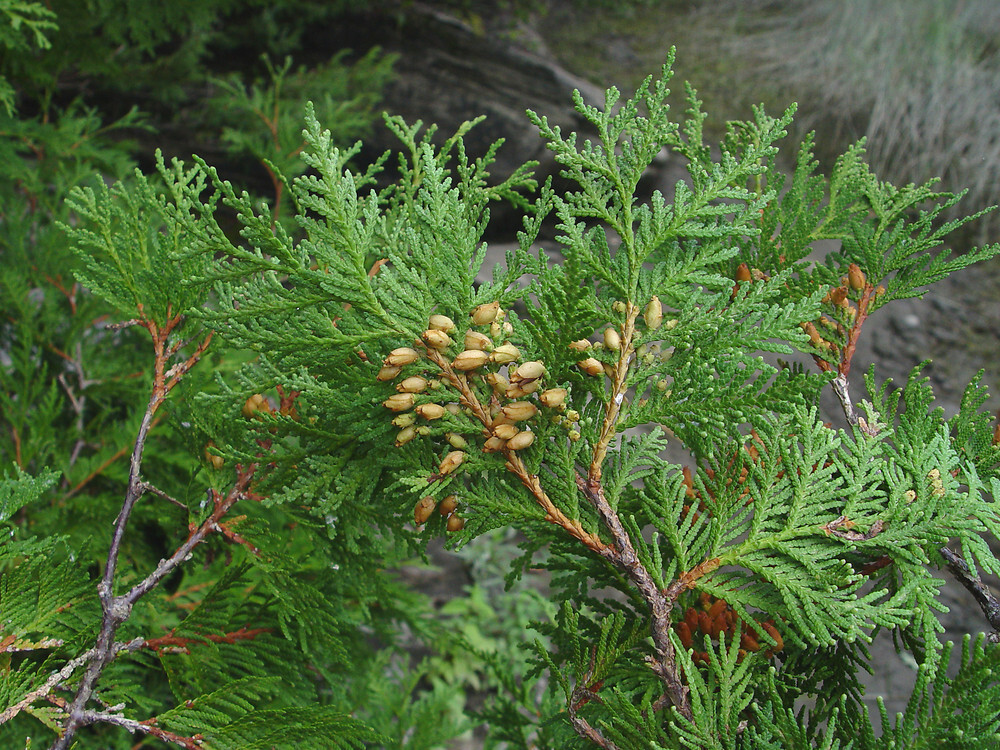
Thuja is also called northern white cedar and arborvitae. Because many very different evergreens go by the common name “cedar,” relying on this name can be problematic. Thuja has scales instead of traditional needles, which – (if you look very closely) grow opposite one another – in alternating branches on flat sprays. Small upright cones turn from yellow-green to brown as they mature. The stripy, fissured, fibrous bark can be reddish or grayish brown, and you may find small chunks of resin in its folds, which make fabulous copal-like incense. It grows in the American northeast and is commonly cultivated (Sibley, 2009). Thuja is credited for saving Jacques Cartier’s crew from scurvy, earning it the moniker arborvitae or “tree of life,” and was the first tree exported from the New World to the Old (Fergus, 2005). As we discussed earlier, researchers now suspect that Cartier’s crew misunderstood which plant Native Americans utilized and that it was more likely to have been white pine (Durzan, 2009). Nonetheless, its popularity has made thuja an important medicinal evergreen on both sides of the pond. As a topical or homeopathic remedy it fights impetigo, warts and papillomatous growths, genital infections, bacterial vaginosis, skin ulcer, hemorrhoids, fungus including Tinea species, and tumors (Brinker, 2008; Groves, 2016; Rajatrashmi et al, 1999; Moore, 2004; Moore, 1993). I personally see impressive topical anti-fungal effects with infused oils and salves. Internally, low (drop) or homeopathic doses stimulate innate immune function, increasing white blood cell count and bone marrow cells (Brinker, 2008; Moore, 2004). Animal studies of homeopathic thuja in 1 M, 200C and 30C potencies suggest immunomodulatory, anti-tumor, and anticancer activity without toxicity (Remya & Kuttan, 2015).
It’s combined with echinacea and baptisia in the cold and upper respiratory infection formula called Esberitox.
We are going to try to grow Baptisia tinctoria this summer!! ( I have it growing but some students want to try it)
This is a really good article compiling reasearch on uses for Thuja- it is from one of my favorite sources, The National Library of Medicine Thuja occidentalis (Arbor vitae): A Review of its Pharmaceutical, Pharmacological and Clinical Properties - PMC
The Following is the first web page that came up in a search- it is not really well written- we evaluated why. I forgot to copy the URL.
"Thuja tree has been used traditionally for centuries by the Native Americans to treat a variety of conditions. Homeopathic practitioners have also used it extensively.
Branches and leaves were made into tincture and used to treat a cough, fever, headache, intestinal parasites, cystitis and venereal diseases.
Topically, thuja was used to treat burns, rheumatism, gout, arthritis, warts, and psoriasis.
Thuja is against warts. It is also used for acute bronchitis and respiratory conditions. Thuja has expectorant and anti-catarrhal properties.
Additionally, Thuja has been used to treat cystitis.
Extracts of the herb can be applied to painful joints and muscles to increase blood circulation, reducing pain.
For warts thuja is used topically – usually in the form of an essential oil.
The essential oil is only used to burn away warts. When the oil is used in this regard, glycerol is applied to the area surrounding the wart as a protection and then the poisonous essential oil is used on the wart itself.
Thuja has also antibacterial and anti-fungal properties and is used for the treatment of infected wounds, burns and skin infections such as ringworm.
Recently, German scientists demonstrated that Thuja strengthens the immune system by stimulating T lymphocytes and increase interleukin-2 production.
Growing evidence also shows that theses properties of Thuja may be effective for spirochete illnesses such as Lyme. Furthermore, Thuja has promising effects in fighting co-infections that are seen with chronic Lyme. The virus-resistant and immune strengthening properties of the herb can also be used as an adjunct to chemotherapy and radiotherapy." (END OF ARTICLE)"
More information on common words you find when searching Thuja:- this might have come from Wikapedia, which is OK to use if you are 100% sure the information is correct- just like AI- use them if you know what you are doing to help with phrasing etc.
Interleukin-2 (IL-2) is an interleukin, which is a type of cytokine signaling molecule forming part of the immune system. It regulates the activities of white blood cells (leukocytes, often lymphocytes) that are responsible for immunity. IL-2 is part of the body's natural response to microbial infection, and in discriminating between foreign ("non-self") and "self". IL-2 mediates its effects by binding to IL-2 receptors, which are expressed by lymphocytes. The major sources of IL-2 are activated CD4+ T cells and activated CD8+ T cells.[5] Put shortly, the function of IL-2 is to stimulate the growth of helper, cytotoxic and regulatory T cells.
T lymphocytes, or T cells, are a type of white blood cell that plays a crucial role in the immune system. They are essential for the adaptive immune response and can be classified into several types:
Cytotoxic T cells: These cells directly kill infected or cancerous cells.
1
Helper T cells: They assist other immune cells by releasing cytokines, which help activate B cells and other T cells.
Regulatory T cells: These help maintain immune tolerance and prevent autoimmune diseases.
T cells are characterized by the presence of a T-cell receptor (TCR) on their surface, which allows them to recognize specific antigens. They are produced in the bone marrow and mature in the thymus. Overall, T lymphocytes are vital for defending the body against infections and diseases.
Article for Thuja ( salve) Butter and it's uses ( You can substitute coccoa butter if you don't like the idea of using dairy butter)
https://www.mynaturaltreatment.com/thuja-salve-recipe-and-how-to-use/